
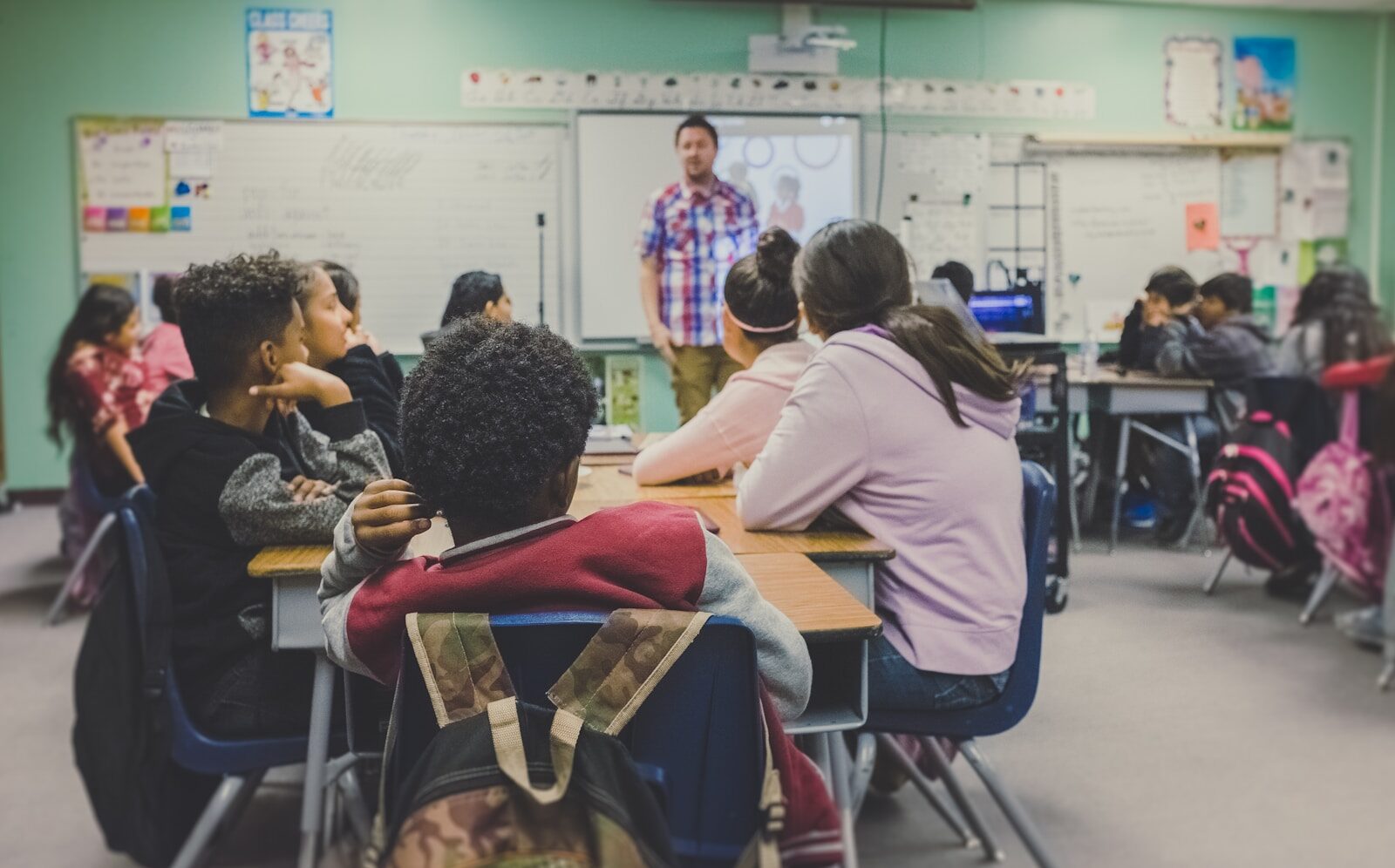
Most people spend years in classrooms, yet few are ever taught how learning itself works.
Students are expected to absorb information, complete assignments, prepare for exams, and demonstrate mastery of new concepts. Teachers are expected to facilitate that process. Parents are often tasked with supporting it at home. Despite all this, many common assumptions about learning are either incomplete or entirely inaccurate.
Popular advice frequently focuses on studying harder, spending more time reviewing notes, or finding the perfect organizational system. While these strategies can help, they often overlook the underlying processes that determine whether information is retained, understood, and applied over time.
Modern research in cognitive psychology, neuroscience, and educational science has dramatically improved our understanding of how people learn. These findings reveal that successful learning is less about intelligence or natural talent and more about how information is processed, practiced, and reinforced.
Understanding these principles can help students improve academic performance, educators design more effective instruction, and lifelong learners acquire new skills with greater efficiency.
Learning Is Not the Same as Memorization
One of the most common misconceptions about education is that learning and memorization are identical.
Memorization involves storing information for later recall. Learning involves creating durable mental frameworks that allow information to be understood, connected, and applied in different situations.
A student may memorize the formula for calculating the area of a triangle. Genuine learning occurs when that student understands why the formula works, recognizes when to use it, and can apply the concept to unfamiliar problems.
This distinction explains why some students perform well immediately after studying but struggle weeks later. Information may have been temporarily memorized without becoming integrated into long-term understanding.
Effective education seeks both retention and comprehension.
Read More: The Difference Between Memorizing and Understanding
The Brain Builds Knowledge Through Connections
The human brain learns by connecting new information to existing knowledge.
When learners encounter unfamiliar material, the brain attempts to relate it to concepts already stored in memory. The stronger these connections become, the easier it is to recall and use information later.
For example, learning about photosynthesis becomes easier when a student already understands basic concepts about plants, sunlight, and energy. Existing knowledge provides a framework into which new information can fit.
This principle helps explain why background knowledge matters so much in education. The more relevant information a learner already possesses, the easier it becomes to acquire additional knowledge within that subject area.
Strong instruction often activates prior knowledge before introducing new concepts, allowing learners to create meaningful connections rather than attempting to memorize isolated facts.
Why Forgetting Happens
Many learners become frustrated when they forget material they studied carefully. In reality, forgetting is a normal part of how memory functions.
The brain constantly filters information to determine what deserves long-term storage. Details that are encountered only once or twice often fade because the brain interprets them as low priority.
This phenomenon is sometimes described through the forgetting curve, a concept first studied by psychologist Hermann Ebbinghaus. Research has repeatedly demonstrated that memory weakens over time unless information is revisited and reinforced.
Fortunately, forgetting is not necessarily a sign of failure. In many cases, the act of retrieving partially forgotten information strengthens memory more effectively than repeated exposure alone.
This insight forms the foundation of several evidence-based learning strategies.
The Power of Active Recall
Active recall is one of the most effective learning techniques identified by educational research.
Instead of repeatedly reviewing information, active recall requires learners to retrieve information from memory without immediate assistance.
Examples include:
- Answering practice questions
- Taking self-created quizzes
- Explaining concepts aloud without notes
- Writing summaries from memory
- Teaching material to another person
Retrieval forces the brain to reconstruct information, strengthening neural pathways associated with that knowledge.
Students often prefer rereading because it feels productive and familiar. Unfortunately, passive review can create an illusion of mastery. Information may appear recognizable without being truly retrievable.
Active recall is more difficult, but difficulty during learning often produces stronger long-term retention.
Why Spaced Repetition Works
Many students rely on cramming before exams. While cramming can produce short-term gains, its effectiveness declines rapidly after testing concludes.
Spaced repetition takes a different approach. Instead of reviewing material once during an extended study session, learners revisit information multiple times over increasing intervals.
A student might review material:
- One day later
- Three days later
- One week later
- Two weeks later
- One month later
Each successful retrieval reinforces memory while reducing future forgetting.
Educational research consistently demonstrates that spaced repetition produces superior long-term retention compared to massed practice, even when total study time remains similar.
For learners seeking durable knowledge rather than temporary exam performance, spacing is one of the most valuable tools available.
Attention Is the Gateway to Learning
No learning occurs without attention.
Modern students face unprecedented competition for cognitive resources. Smartphones, social media, streaming platforms, notifications, and multitasking environments continuously divide focus.
Research suggests that frequent interruptions increase cognitive load and reduce information retention. Even brief distractions can disrupt concentration and impair learning efficiency.
Maintaining attention does not require perfect focus for hours at a time. Instead, many learners benefit from structured periods of concentrated work followed by short breaks.
Creating environments that minimize interruptions often produces greater benefits than attempting to increase willpower alone.
Learning begins with attention, and attention thrives when distractions are intentionally managed.
The Role of Sleep in Academic Success
Sleep is often sacrificed during busy academic periods.
Ironically, doing so may undermine the very learning students hope to improve.
During sleep, the brain consolidates memories, strengthens neural connections, and processes information acquired throughout the day. Numerous studies have linked adequate sleep to improved attention, memory, reasoning, and academic performance.
Students who consistently sleep well frequently outperform peers who study longer hours but remain chronically sleep-deprived.
Effective learning depends not only on study habits but also on the biological processes that support memory formation.
Sleep should be viewed as part of learning rather than time taken away from it.
Mistakes Are Essential to Learning
Many learners interpret mistakes as evidence of inability. Educational research suggests the opposite.
Errors provide information about gaps in understanding. When mistakes are analyzed and corrected, they often become powerful learning opportunities.
Productive struggle encourages deeper processing, greater problem-solving ability, and stronger long-term retention.
The goal of education is not flawless performance during every attempt. The goal is continuous improvement through feedback, reflection, and adjustment.
Environments that normalize mistakes often promote greater learning than environments focused exclusively on perfection.
Read More: How to Learn From Mistakes Instead of Repeating Them
Technology and Modern Learning
Technology has transformed educational access.
Students can access lectures, tutorials, simulations, scholarly databases, and collaborative learning communities from nearly anywhere. Digital tools provide opportunities that previous generations could scarcely imagine.
At the same time, technology introduces challenges.
Information overload, misinformation, distraction, and excessive multitasking can interfere with effective learning. The value of educational technology depends less on the tools themselves and more on how those tools are used.
Technology is most beneficial when it supports evidence-based learning principles such as retrieval practice, spaced repetition, feedback, and engagement.
No app or platform can replace the fundamental cognitive processes involved in learning.
Lifelong Learning Beyond the Classroom
Learning does not end with graduation. Career development, technological change, personal interests, and civic participation increasingly require adults to acquire new knowledge throughout life.
Fortunately, the principles that support academic learning apply equally to professional and personal growth.
Whether someone is learning a language, developing technical skills, mastering a hobby, or pursuing continuing education, effective learning relies on attention, practice, retrieval, feedback, and persistence.
Understanding how learning works empowers individuals to become more independent and adaptable learners regardless of age.
Conclusion
Learning is not a mysterious talent possessed by a fortunate few. It is a process governed by principles that researchers have spent decades studying and refining.
Students who understand these principles can study more effectively. Educators can design more impactful instruction. Parents can better support academic development. Lifelong learners can acquire new skills with greater confidence.
While no strategy eliminates effort, science offers valuable guidance about where effort should be directed.
The most successful learners are not necessarily those who work the hardest. They are often the ones who understand how learning actually works and use that knowledge intentionally over time.